# Bloom UTM Tracking Integration
Capture UTM parameters in Bloom opt-ins with HandL UTM Grabber so source, medium, campaign, click ID, and referrer data follow every email signup.
# Bloom Integration for UTM collection with HandL UTM Grabber
## UTM attribution overview
This guide explains Bloom Integration for UTM collection with HandL UTM Grabber. It helps you capture UTM source, medium, campaign, term, content, click IDs, referrer, and landing page data and keep the marketing context needed for accurate reporting across forms, bookings, signups, and sales.
Here we are going to explain just for ActiveCampaign, but this is pretty much applicable to any email service provider (CRM) available in GBS.
#### 1) Authorize your ActiveCampaign in Bloom.
We are not going to cover this part here, please see Bloom's own documentation for this.
#### 2) Add the custom fields to your Bloom opt-in
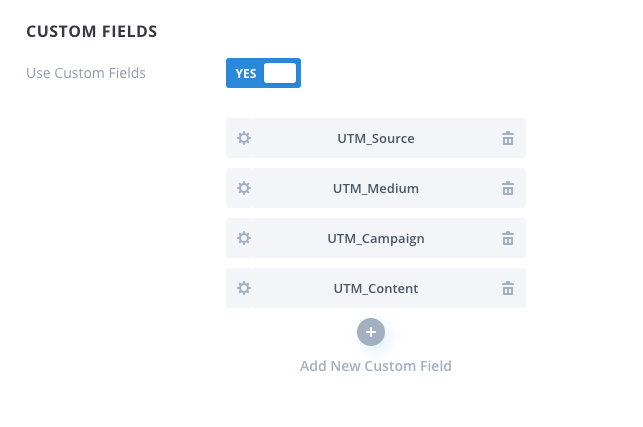
Click gear icon for the optin and design. Scroll down to Custom Fields and select "Yes" and all the custom fields as shown below.
[](https://docs.utmgrabber.com/uploads/images/gallery/2021-07/image-1627488728669.png)
#### 3) Add the following script to your footer section of the optin form.
You may need to modify the code to fit your need. such as changing the placeholder field to fit your field name.
```
```
#### 4) Hide the custom fields
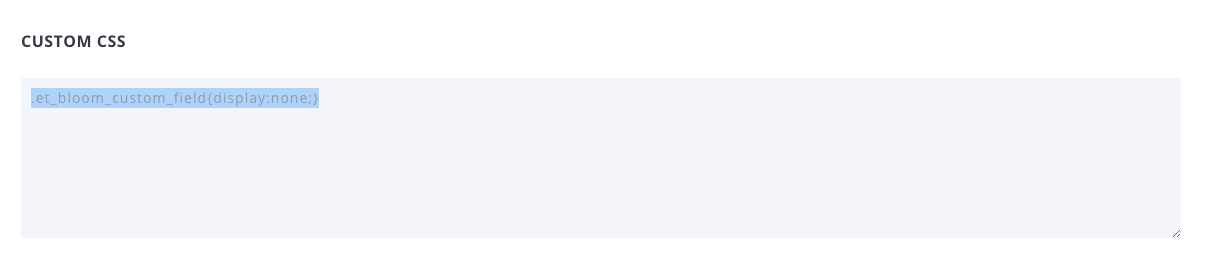
You can add the following CSS rule to hide the custom fields ut adding it to Custom CSS field in Bloom > Design
```
.et_bloom_custom_field{display:none;}
```
[](https://docs.utmgrabber.com/uploads/images/gallery/2021-07/image-1627572236186.png)
# Send Bloom UTMs via Zapier or Webhook
## UTM attribution overview
This walkthrough covers sending full UTM Grabber data from Bloom to Zapier, Make, or your own webhook. Handy when you need gclid, fbclid, first-touch fields, or custom params alongside the lead or order.
For the primary setup, see [the main Bloom guide](https://docs.utmgrabber.com/books/bloom-integration/page/bloom-integration-for-utm-collection).
### When a webhook makes sense
Native fields in Bloom often stop at basic UTMs. A webhook lets you push everything UTM Grabber stores without trimming values or losing click IDs.
### Thank-you page script
Paste this on your confirmation page. Swap in your Zapier or Make hook URL.
```
```
Full pattern explained in [Triggering Zapier on Thank you Page](https://docs.utmgrabber.com/books/zapier-integration/page/triggering-zapier-on-thank-you-page).
### Quick Zapier / Make checklist
1. Create a Catch Hook trigger and copy the URL
2. Run a test conversion with UTMs in the landing URL
3. Confirm gclid, utm\_source, and email (if present) show up in the payload
4. Map fields into your CRM or spreadsheet
Parameter reference: [Native WP Shortcodes](https://docs.utmgrabber.com/books/102-getting-started-for-handl-utm-grabber-v3/page/native-wp-shortcodes).
Make users: see [Make Integromat integration](https://docs.utmgrabber.com/books/makecomintegromat-utm-tracking-integration).